Banner - Marina Maintenance Series - 2. Safety and Seawall Management

Marina Maintenance Series – 2. Safety and Seawall Management
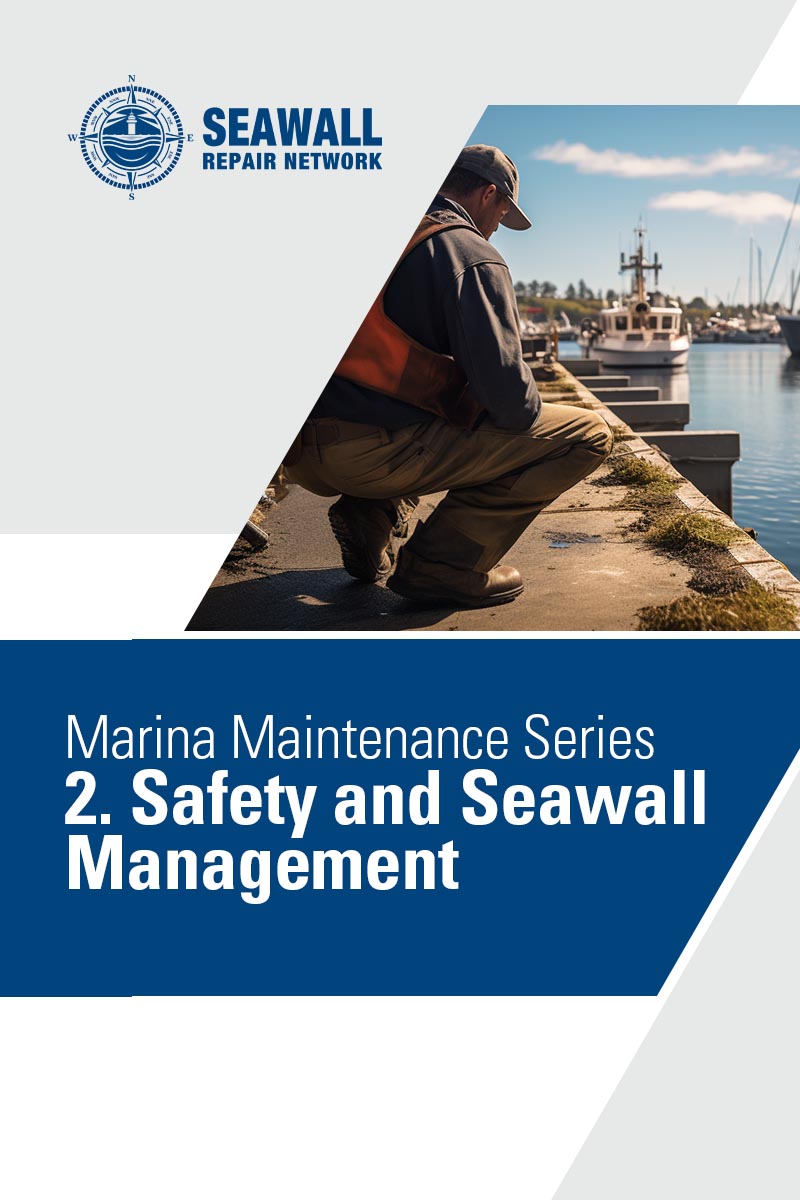
Body - Marina Maintenance Series - 2. Safety and Seawall ManagementSafety and security rank high on the list of priorities for any marina owner or operator. While various factors contribute to a secure environment, the condition of the marina’s seawall plays an indispensable role. A well-managed seawall not only protects against natural elements but also serves as a critical component in the overall safety infrastructure of the marina. Understanding the role of effective seawall management enhances marina safety and reveals valuable strategies for marina owners and operators.

Water Ingress in Seawalls and Its Risks

The Hazards of Water Ingress

Water ingress, or the penetration of water through cracks, joints, or imperfections in a seawall, poses significant safety risks. When water infiltrates the structure, it can lead to further erosion, weakening the seawall and making it more susceptible to failure. In extreme cases, water ingress can result in the collapse of portions of the seawall, endangering boats, property, and even lives.

Operational Impact of Water Ingress

A compromised seawall due to water ingress can have a ripple effect on marina operations. For instance, areas near the weakened seawall may need to be cordoned off, reducing available space for boat docking and other activities. Moreover, the repair work required to address water ingress often necessitates operational downtime, affecting the marina’s revenue and customer satisfaction.

Mitigating Water Ingress

Preventing water ingress starts with regular inspections to identify potential weak points in the seawall. Once identified, these areas should be promptly sealed using specialized materials like polymer chemical grouts, which not only block water but also reinforce the supporting soil behind the structure. By proactively addressing water ingress, marina owners and operators can significantly reduce safety risks and operational disruptions.

Managing Hydrostatic Pressure in Marina Seawalls

The Role of Hydrostatic Pressure

Hydrostatic pressure can exert a devastating toll on marina seawalls, particularly when there is excessive rainwater or floodwater build-up on the landward side. This build-up, often due to inadequate or clogged weep holes in the wall, can place untenable pressure on the structure. Such pressure can lead to wall movement, cracking, and even failure. Once the concrete cracks, water from the landward side can pull soil through the wall, causing depressions or sinkholes near the structure. Additionally, the exposure of internal steel rebar or mesh to moisture can lead to rust stains and further degradation.

Hydrostatic Pressure Control Systems

To mitigate these risks, a specialized hydrostatic pressure release system can be implemented. This system involves coring through the seawall and installing pressure release technology that is used to regulate the release of excess water pressure from behind the wall. This technology also prevents soil from the landward side from passing through, thereby averting new erosion and void formations.

Best Practices for Hydrostatic Pressure Management

Regular monitoring is essential for effective hydrostatic pressure management. Sensors can be installed to provide real-time data, enabling timely interventions when pressure levels approach critical thresholds. Additionally, routine maintenance checks on hydrostatic pressure control systems can ensure they function optimally, further enhancing marina safety.

Actionable Tips

Implement Regular Monitoring

Consistent and regular monitoring of seawall conditions can prevent many safety issues. Whether through visual inspections or the use of advanced sensors, timely detection of problems allows for immediate action.

Use Advanced Materials

The use of advanced materials like polymer chemical grouts for sealing leaks and specialized systems for hydrostatic pressure management can significantly enhance seawall safety. These materials offer the dual benefits of durability and effectiveness.

Engage Expert Consultation

Given the technical complexities involved in seawall management, consulting with experts can provide invaluable insights. They can assess the unique needs of your marina and recommend tailored solutions for optimal safety.

Maintain Transparency with Customers

Open communication with customers about seawall conditions and any planned maintenance activities can go a long way in building trust. Transparency assures customers that their safety is a top priority, which in turn can contribute to customer loyalty and satisfaction.

Safety and Seawall Management

The safety of a marina is intricately linked to the condition of its seawall. Effective management of issues like water ingress and hydrostatic pressure is not just a maintenance requirement but a critical safety measure. By implementing regular monitoring, using advanced materials, and seeking expert consultation, marina owners and operators can significantly enhance the safety and security of their facilities.

In the competitive landscape of marina management, safety cannot be compromised. A well-maintained seawall serves as a testament to a marina’s commitment to safety, influencing both customer trust and operational success. Therefore, seawall management should be viewed not just as a maintenance task but as a strategic imperative for any marina aiming for long-term success and sustainability.

By adopting a proactive approach to seawall management, marina owners and operators can mitigate safety risks, minimize operational disruptions, and enhance customer satisfaction. In an industry where safety is paramount, the state of your seawall can significantly impact your marina’s reputation and success. Therefore, investing in effective seawall management is not just a safety measure but a strategic move that pays dividends in customer trust and business sustainability.

Banner - Marina Maintenance Series - 1. Preparing Seawalls for Extreme Weather

Marina Maintenance Series – 1. Preparing Seawalls for Extreme Weather

Body - Marina Maintenance Series - 1. Preparing Seawalls for Extreme WeatherExtreme weather events like hurricanes, tropical storms, and heavy rainfall present significant challenges to marina owners and operators. The seawall, a critical component designed to protect against water erosion and flooding, can be severely compromised if not adequately fortified for extreme conditions. Strengthening marina seawalls to increase their chances of withstanding extreme weather events is essential for ensuring both property safety and customer satisfaction.

Understanding the Risks

Types of Extreme Weather Events

Different weather phenomena pose unique challenges to marina seawalls:

  1. Hurricanes and Tropical Storms: These bring strong winds, heavy rainfall, and storm surges, exerting immense pressure on seawalls.
  2. Heavy Rainfall and Flooding: Excessive rain can lead to rapid water level rises, adding hydrostatic pressure on the seawall.

Potential Damages

Failure to prepare can result in:

  1. Structural Damage: Cracks, breaks, or even the collapse of the seawall.
  2. Erosion: Loss of land behind the seawall due to water intrusion.
  3. Financial Loss: Costly repairs and potential loss of business due to operational downtime.

Preparatory Measures

Structural Assessment

Before extreme weather arrives, a comprehensive structural assessment is crucial. This involves:

  1. Visual Inspection: Check for visible signs of wear, tear, or damage.
  2. Expert Assessment: Employ marine engineers or qualified contractors to evaluate the seawall’s structural integrity.

Structural Reinforcement

Stabilizing the wall and managing hydrostatic pressure are crucial, especially during extreme weather events. A marine contractor may perform some or all of the following steps, based on the assessment:

  1. Installation of Hydrostatic Pressure Release Systems: Utilize proprietary pressure release technology to regulate the release of hydrostatic pressure that may form behind the wall.
  2. Soil Solidification with Polymers: Inject structural polymers behind the wall on the landward side to transform unstable soil into a permanent, lightweight solid mass, providing a supportive medium for the creation of de-watering channels.
  3. Installation of a Seawall Anchoring System: Implement an advanced anchoring system to further stabilize the seawall. These systems secure the wall to more stable soil layers or bedrock on the landward side, providing additional resistance against the forces exerted by extreme weather events.

Drainage Systems

Proper drainage systems should be in place to manage excess water:

  1. Weep Holes: Ensure that weep holes are clear and functional to relieve hydrostatic pressure.
  2. Drainage Channels: Install or maintain drainage channels to direct water away from critical areas.

Emergency Response Plan

Develop and communicate an emergency response plan to all staff members, including:

  1. Evacuation Procedures: Steps to safely evacuate the marina if necessary.
  2. Emergency Contacts: A list of contacts for local authorities and emergency services.

Best Practices

Regular Maintenance

Routine maintenance checks should be conducted to ensure that all preparatory measures remain effective. This includes regular inspections of hydrostatic pressure release systems and drainage channels.

Staff Training

Staff should be trained in emergency response procedures and how to operate and monitor hydrostatic pressure release systems effectively.

Customer Communication

Keep customers informed about the steps being taken to strengthen the seawall, as this can enhance trust and satisfaction.

An Ounce of Prevention is Worth a Pound of Cure

Preparing a marina seawall for extreme weather events is not just a safety measure but also a business imperative. The structural integrity of the seawall directly impacts the marina’s ability to protect assets and continue operations. By understanding the risks, and taking preparatory measures like structural assessments, material upgrades, and advanced hydrostatic pressure management, marina owners and operators can significantly mitigate the impact of extreme weather events. This proactive approach not only safeguards the marina but also instills confidence among customers, enhancing the marina’s reputation and long-term success.

Banner - Seawalls in Real Estate Series - 4. Future-Proofing Waterfront Properties

Seawalls in Real Estate Series – 4. Future-Proofing Waterfront Properties

Body - Seawalls in Real Estate Series - 4. Future-Proofing Waterfront PropertiesIn the ever-changing landscape of waterfront property management, future-proofing a seawall is a topic of increasing importance. For real estate agents, understanding how to prepare seawalls for long-term resilience can be a unique selling point that sets you apart in the market. This post will explore the technologies and best practices for ensuring a seawall’s longevity.

Adaptive Technologies as a Value-Add

One of the most effective ways to future-proof a seawall is through the use of adaptive technologies. These could include advanced monitoring systems that provide real-time data on the seawall’s condition, or modular designs that allow for easy upgrades and adjustments. For instance, some seawalls now incorporate sensor networks that can alert property owners to potential issues before they become significant problems. This proactive approach can be a compelling selling point for potential buyers who are looking for properties that incorporate smart technologies.

Preparing Properties for Long-Term Resilience

Another aspect of future-proofing involves preparing the property itself for long-term resilience. This could mean implementing advanced drainage systems to deal with increased rainfall or installing reinforced barriers that can withstand stronger storms. Real estate agents can highlight these features as long-term benefits, adding value to the property and making it more attractive to buyers.

For example, a property with a seawall that has been reinforced with advanced materials designed for durability will likely have a higher market value than a similar property with a standard seawall. Agents can use this as a selling point, emphasizing the reduced future maintenance costs and increased property value.

Best Practices for Ensuring Longevity

Finally, future-proofing a seawall isn’t just about technology or materials; it’s also about regular maintenance and inspections. Agents should advise property owners to have their seawalls inspected by certified professionals at regular intervals. These inspections can identify potential issues early on, allowing for preventative measures that can extend the seawall’s lifespan.

Future-proofing seawalls is an essential consideration for anyone involved in the buying or selling of waterfront properties. Real estate agents who understand the value of long-term resilience can offer invaluable advice to their clients, making them more competitive in the market. From adaptive technologies to regular maintenance, several strategies can ensure a seawall’s longevity, adding value to the property and peace of mind for the owner.

Banner - Seawalls in Real Estate Series - 3. Cost and Environment

Seawalls in Real Estate Series – 3. Cost and Environment

Body - Seawalls in Real Estate Series - 3. Cost and EnvironmentWhen it comes to seawall repairs, the financial and environmental implications are often top concerns for property owners. As a real estate agent, understanding the cost dynamics and eco-friendly options in seawall repair can give you a competitive edge. This post will explore the financial considerations, including DIY vs. professional repair, and delve into the growing trend of eco-friendly repair options.

DIY vs. Professional Repair: Advising Your Clients

The allure of DIY seawall repair is often rooted in the perceived cost-saving benefits. While it’s true that minor repairs can sometimes be handled without professional intervention, the risks often outweigh the rewards. Incorrectly executed repairs can lead to more significant issues down the line, ultimately costing the property owner more in the long run.

For real estate agents, advising clients on the pros and cons of DIY vs. professional repair can be invaluable. A well-executed, professional repair can be a strong selling point for potential buyers and can positively impact the property’s resale value.

Financing Options: Impact on Resale Value

Financing seawall repairs can be a significant investment. Various options are available, ranging from personal loans to specialized marine construction loans. Some property owners even opt for home equity lines of credit to finance these repairs.

Understanding these financing options can help real estate agents guide their clients better. For instance, a property with a recently repaired seawall, financed in a manner that doesn’t burden the property with debt, can be more attractive to buyers.

Eco-Friendly Repairs: A Selling Point

When considering seawall repairs, it’s crucial to note if the contractor uses materials that meet NSF/ANSI/CAN 61 standards for contact with drinking water. These standards, developed by the National Sanitation Foundation, ensure that the materials used are safe for the environment and public health. Compliance with these standards can be a significant selling point, especially for buyers who are environmentally conscious. Moreover, using NSF-approved materials ensures adherence to the Safe Water Drinking Act, reducing legal risks and adding another layer of assurance for potential buyers.

Cost and environmental considerations are crucial factors in the seawall repair process. Real estate agents equipped with this knowledge can offer more comprehensive advice to their clients. Whether it’s guiding them away from risky DIY repairs, advising on financing options, or highlighting the benefits of eco-friendly methods, an informed agent can make a significant difference in the buying and selling process.

Banner - Seawalls in Real Estate Series - 2. Effective Repair

Seawalls in Real Estate Series – 2. Effective Repair

Body - Seawalls in Real Estate Series - 2. Effective RepairThe world of seawall repair has evolved significantly over the years, thanks in part to advancements in technology. For real estate agents representing waterfront properties, understanding these modern repair techniques can be a game-changer. This post delves into the cutting-edge technologies that are shaping the future of seawall repair, from polymer-based solutions to hydrostatic pressure control systems.

Polymer-Based Repairs as a Selling Point

Polymers have revolutionized the way seawalls are repaired. These synthetic compounds can fill cracks, reinforce structures, and even prevent erosion. For a potential buyer, the use of polymer-based repairs can be a significant selling point. It suggests that the property owner has invested in long-lasting, effective solutions.

Here’s how it works: Technicians inject the polymer into the cracks or weak points of the seawall. The material then expands, filling the gaps and creating a watertight seal. This method is not only efficient but also minimally invasive, meaning less disruption to the property.

Hydrostatic Systems: Preventing Property Damage

Hydrostatic pressure, the force exerted by water against the seawall, can lead to significant damage over time. Modern hydrostatic pressure control systems can mitigate this risk. These systems often include drainage solutions that redirect water away from the seawall, reducing pressure and potential damage.

For real estate agents, understanding the benefits of hydrostatic systems can be invaluable when discussing property features with clients. It’s an added layer of security that can also positively impact property valuation.

Anchoring and Concrete Preservation

Anchoring systems add another layer of stability to seawalls. They are often used in conjunction with other repair methods to ensure long-term durability. Anchors are driven deep into the ground behind the seawall, providing additional support. This is particularly beneficial in areas prone to high winds or strong currents.

Concrete preservation techniques, such as the application of specialized coatings, can also extend the life of a seawall. These coatings protect against erosion, saltwater corrosion, and other environmental factors.

Long-Term Investment Benefits

All these modern repair technologies contribute to the long-term benefits of owning a waterfront property. They can be excellent selling points for real estate agents to discuss with potential buyers. A well-maintained, technologically advanced seawall can significantly increase a property’s market value and reduce future maintenance costs.

Modern repair technologies offer effective, long-lasting solutions for maintaining seawalls. Real estate agents who understand these technologies can provide invaluable advice to their clients, affecting both the buying and selling process. From polymer-based repairs to advanced anchoring systems, staying updated on the latest advancements can set an agent apart in the competitive world of waterfront properties.

Banner - Seawalls in Real Estate Series - 1. The Fundamentals

Seawalls in Real Estate Series – 1. The Fundamentals

Body - Seawalls in Real Estate Series - 1. The FundamentalsWhen it comes to waterfront properties, one feature often overlooked by real estate agents is the seawall. Yet, this critical infrastructure can significantly impact property value, safety, and long-term investment. This blog post aims to equip agents with essential knowledge about seawalls, their types, and how to spot red flags during property assessments.

Why Seawalls Matter in Property Valuation

A seawall serves as a protective barrier between a body of water and the property. It prevents erosion, safeguards against flooding, and adds an extra layer of security. For potential buyers, a well-maintained seawall can be a significant selling point. It not only ensures the property’s longevity but also can affect insurance costs. Agents should consider the condition of the seawall when determining property value and discussing it with clients.

Types of Seawalls and Their Impact on Property Prices

Seawalls come in various forms, each with its own set of advantages and disadvantages. The most common types include:

  • Bulkheads: These are vertical walls usually made of wood, steel, or vinyl. They are effective but may require frequent maintenance.
  • Revetments: These sloping structures consist of loose stones or concrete. They are generally more natural-looking but may be less effective against strong waves.
  • Vertical Walls: Made from concrete or steel, these walls are highly effective but can be expensive to install and maintain.

The type of seawall can influence the property’s market value. For example, a property with a well-maintained vertical wall may command a higher price than one with a deteriorating bulkhead.

Spotting Red Flags in Seawall Conditions

During property showings or assessments, agents should look for signs of wear and tear, including:

  • Cracks or Gaps: These can indicate structural issues that may require immediate attention.
  • Erosion Near the Base: This could mean the seawall is not effectively preventing soil loss.
  • Water Seepage: If water is coming through the wall, it’s a sign the seawall may be compromised.

Identifying these issues early can help in negotiations and may prevent future disputes or disappointments.

Understanding the basics of seawalls is crucial for any real estate agent dealing with waterfront properties. It affects property valuation, client discussions, and long-term investment plans. By knowing what to look for and how to assess a seawall’s condition, agents can provide better advice to their clients, leading to more successful transactions.

Banner - The Green Seawall

Sustainability Series – 4. The Green Seawall

Body - The Green SeawallIn an era where sustainability is more than a buzzword, it’s a business imperative, waterfront property owners and managers find themselves at the intersection of environmental responsibility and asset management. Seawalls, bulkheads, and revetments are not just physical barriers against the forces of nature; they are also opportunities to implement sustainable practices that benefit both the environment and the bottom line. This article explores the avenues for incorporating sustainability into seawall maintenance and repair, making the case that going green is not just an ethical choice but also a financially sound decision.

Sustainable Materials and Methods for Seawall Maintenance and Repair

Eco-Friendly Construction Materials

Traditional construction materials like concrete and steel have significant environmental impacts, from the energy-intensive production processes to the emissions associated with their manufacture. Eco-friendly alternatives such as recycled plastic lumber or fiber-reinforced composites offer a more sustainable choice. These materials are not only durable but also require less energy to produce, reducing the overall carbon footprint of your seawall.

NSF Approved Repair Material

When selecting a contractor for seawall repair, it’s crucial to ensure they use materials that meet NSF/ANSI/CAN 61 standards. These standards, developed by the National Sanitation Foundation (NSF), are designed to safeguard public health, particularly concerning drinking water. NSF is a third-party certification organization that conducts rigorous testing on products that come into contact with drinking water. Their certification process also includes thorough inspections of the manufacturer’s plant and quality assurance practices.

Compliance with NSF standards is not just a matter of meeting regulatory requirements; it’s also about public health. The Safe Water Drinking Act (SDWA) empowers the EPA to impose penalties on industries that fail to comply, including those whose activities contaminate drinking water. Using NSF-approved materials ensures that your seawall repair project won’t become a source of drinking water contamination, aligning with both legal requirements and sustainable practices.

Low-Impact Installation Techniques

The methods used to install or repair a seawall can also have environmental implications. Traditional techniques often involve heavy machinery that can disrupt local ecosystems. Low-impact installation methods, such as hydraulic jacking or vibration-free sheet piling, minimize ecological disturbance while still ensuring a robust and durable structure.

Natural Seawall Solutions

In some cases, natural solutions like living shorelines can serve as effective, sustainable alternatives to traditional seawalls. These systems use native vegetation and organic materials to stabilize the shoreline, providing erosion control while also enhancing local biodiversity.

Sustainable Maintenance Practices

Even routine maintenance activities can be made more sustainable. For example, using non-toxic, biodegradable cleaning agents for surface treatments can reduce environmental harm. Similarly, opting for electric or hybrid equipment for inspections and minor repairs can cut down on greenhouse gas emissions.

Long-Term Benefits and Potential Cost Savings of Sustainable Practices

Durability and Longevity

Sustainable materials often come with the added benefit of increased durability. For instance, polymer repair materials are generally more resistant to corrosion, reducing the need for frequent repairs and thereby lowering long-term maintenance costs.

Energy Savings

Sustainable seawall solutions can also contribute to energy savings. Natural seawalls, with their vegetation and organic materials, act as carbon sinks, capturing and storing carbon dioxide. Moreover, the use of energy-efficient equipment for maintenance activities can result in significant energy cost reductions over time.

Regulatory Incentives

Many jurisdictions offer financial incentives for adopting sustainable practices, such as tax credits, grants, or reduced permit fees. Taking advantage of these incentives can offset the initial costs of implementing sustainable seawall solutions.

Enhanced Property Value

A sustainably managed seawall can significantly enhance the value of a waterfront property. As sustainability becomes a key consideration for investors and tenants alike, properties that can demonstrate environmental responsibility hold a competitive edge in the market.

Risk Mitigation

Sustainable practices often align with risk mitigation strategies. For example, a living shoreline not only serves as a sustainable seawall alternative but also enhances the property’s resilience to climate change by providing natural flood buffers.

The Ethical and Financial Case for Sustainable Practices

The call for sustainability in property management is not just a trend; it’s a fundamental shift in how we view our interaction with the environment. For waterfront property owners and managers, the seawall presents a unique opportunity to align environmental stewardship with financial prudence.

By opting for sustainable materials and methods, you’re not just reducing your property’s environmental impact; you’re also setting the stage for long-term cost savings, regulatory benefits, and enhanced property value. Sustainable practices in seawall maintenance and repair offer a win-win scenario, marrying ethical responsibility with financial viability.

So, as you plan your next seawall maintenance or repair project, consider going green. It’s not just about doing the right thing for the planet; it’s also about doing the smart thing for your business. Adopting sustainable practices today will position your property for success in an increasingly eco-conscious world, making it a choice you won’t regret.

Banner - Public Safety and Your Seawall

Sustainability Series – 3. Public Safety and Your Seawall

Body - Public Safety and Your SeawallIn the world of waterfront property management, seawalls serve as more than just barriers against the elements; they are also critical components in ensuring public safety. A well-maintained seawall not only protects property but also safeguards lives. This how-to guide aims to provide waterfront commercial property owners and managers with a comprehensive understanding of how to ensure public safety through effective seawall management.

Step-by-Step Guide on Enhancing Public Safety

Step 1: Conduct Regular Safety Audits

The first step in ensuring public safety is conducting regular safety audits of your seawall. These audits should assess the structural integrity, signage, access points, and any potential hazards like loose materials or sharp edges.

Step 2: Implement Safety Measures

Based on the audit findings, implement necessary safety measures. This could include installing guardrails, warning signs, or even barriers to restrict access to particularly hazardous areas.

Step 3: Monitor for Wear and Tear

Regularly inspect the seawall for signs of wear and tear that could compromise safety. Look for cracks, erosion, or material degradation that could weaken the structure and make it unsafe for public interaction.

Step 4: Maintain Adequate Lighting

Ensure that the area around the seawall is well-lit to prevent accidents during low-light conditions. Adequate lighting can deter unwanted activities and help in emergency situations.

Step 5: Establish Emergency Protocols

Prepare for the worst-case scenario by establishing emergency response protocols. Make sure that life-saving equipment like lifebuoys and ropes is readily accessible and that staff are trained in emergency response procedures.

Step 6: Engage with the Community

Keep the local community informed about the safety measures in place and any upcoming maintenance activities. Community engagement can provide valuable feedback and foster a sense of shared responsibility for maintaining safety.

Step 7: Document Everything

Maintain meticulous records of all inspections, repairs, and safety measures implemented. This documentation can serve as evidence of due diligence in case of any legal issues.

The Legal Implications of Safety Lapses

Liability Risks

Failure to maintain a safe environment around your seawall can result in significant legal liabilities. If an accident occurs due to a lack of safety measures, the property owner could face lawsuits for negligence.

Regulatory Compliance

Various local, state, and federal regulations govern public safety around waterfront properties. Non-compliance with these regulations can result in fines, legal actions, and even forced closures.

Reputational Damage

Legal battles and regulatory actions can severely damage the reputation of a property, affecting its value and desirability. In today’s age of social media, news of safety lapses can spread quickly, causing long-term harm to your property’s standing in the community.

The Role of Safety in Community Relations and Legal Standing

Ensuring public safety around your seawall is not just a legal obligation; it’s also a moral duty and a smart business practice. A well-maintained, safe seawall enhances community relations, fosters trust, and contributes to the property’s overall value.

By following a structured, proactive approach to safety, property owners and managers can mitigate risks, comply with regulations, and protect both the public and their investment. In the long run, the role of safety in seawall management cannot be overstated. It’s not merely a line item on a budget or a regulatory checkbox; it’s a cornerstone of responsible property ownership and community stewardship.

So, the next time you review your property management plans, make sure that public safety tops the list. Invest in regular audits, engage with the community, and keep meticulous records. Your diligence will pay off in the form of a safer, more secure, and more valuable waterfront property.

Banner - Seawalls and Structural Integrity

Sustainability Series – 2. Seawalls and Structural Integrity

Body - Seawalls and Structural IntegrityIn the realm of waterfront property management, few elements hold as much significance as the structural integrity of seawalls, bulkheads, and revetments. These barriers serve as the first line of defense against the forces of nature, safeguarding not just the property but also its financial and legal standing. Understanding the crucial role of structural integrity in maintaining protective structures like seawalls, bulkheads, and revetments is essential.

The Telltale Signs of Structural Wear and Tear

Cracks and Erosion

The most obvious sign of structural wear and tear is visible cracking. Cracks can appear on the surface or within the structure, signaling that the material has started to weaken. Erosion at the base of the seawall is another red flag, indicating that the structure is losing its foundational support.

Discoloration and Material Degradation

Discoloration often suggests material degradation due to exposure to harsh environmental conditions. While it may seem like a cosmetic issue, discoloration can be an early warning sign of more severe structural problems.

Misalignment and Deformation

Over time, sections of the seawall may become misaligned or deformed. This misalignment can compromise the structure’s ability to distribute loads evenly, leading to accelerated wear and tear.

Water Seepage

Water seepage through the seawall is a severe issue that requires immediate attention. Seepage indicates that the structure is no longer watertight, putting the property at risk of flooding and soil erosion.

The Financial and Legal Repercussions of Ignoring Structural Integrity

Skyrocketing Repair Costs

Ignoring the signs of structural wear and tear can lead to catastrophic failure, requiring extensive and costly repairs. A compromised seawall can result in damage to other property elements, multiplying the repair costs exponentially.

Liability and Legal Risks

A failing seawall doesn’t just pose a risk to your property; it also endangers neighboring properties and public spaces. Property owners can find themselves entangled in legal battles, facing liability claims for damages caused by their neglected seawall.

Insurance Complications

Many insurance policies have clauses that exclude coverage for “neglect.” If an insurance company determines that a seawall failed due to lack of maintenance, they may deny any claims related to the failure, leaving the property owner to shoulder the full financial burden.

Depreciated Property Value

A seawall in poor condition can significantly depreciate the value of the entire property. Prospective buyers or tenants will likely consider the potential repair costs and legal risks, reducing their willingness to invest.

The Imperative of Regular Inspections and Maintenance

The Role of Professional Inspections

Regular inspections by qualified engineers can identify potential issues before they escalate into significant problems. These inspections should be thorough, covering every aspect of the structure, from the material condition to the effectiveness of drainage systems.

Maintenance Schedules

Based on the inspection findings, property owners should establish a regular maintenance schedule. This schedule should include routine checks, minor repairs, and even material replacements as needed.

Technological Aids

Advancements in sensor technology now allow for real-time monitoring of structural integrity. These sensors can detect changes in pressure, moisture levels, and material conditions, providing an additional layer of security.

Budgeting for Maintenance

Proactive maintenance requires budget allocation. However, this should not be viewed as an expense but rather as an investment in the property’s long-term viability and value.

The structural integrity of seawalls, bulkheads, and revetments is not a matter to be taken lightly. It holds the key to the financial and legal well-being of any waterfront property. Ignoring the signs of structural wear and tear can lead to devastating consequences, both financially and legally.

Regular inspections and proactive maintenance are not optional; they are essential practices that safeguard the property and its stakeholders. By recognizing the critical role of structural integrity and acting upon it, property owners and managers not only protect their investments but also contribute to the broader well-being of the community and the environment.

In summary, the structural integrity of your seawall is a cornerstone of responsible property management. Make it a priority, allocate the necessary resources, and you’ll secure not just your property but also its long-term financial and legal standing.

Banner - Proactive Seawall Maintenance

Sustainability Series – 1. Proactive Seawall Maintenance

Body - Proactive Seawall MaintenanceWhen it comes to waterfront properties, the seawall often serves as the unsung hero, quietly shielding valuable assets from the relentless forces of nature. Yet, many commercial property owners and managers overlook the critical importance of regular seawall maintenance. Proactive maintenance isn’t just a good practice – it’s a financial imperative.

The High Cost of Neglect

The Domino Effect of Deferred Maintenance

Deferred maintenance creates a domino effect that no property owner wants to experience. A small crack today can lead to a significant structural failure tomorrow. When a seawall fails, it doesn’t just affect the wall itself. It jeopardizes the entire property, from buildings and landscaping to utilities and infrastructure.

Financial Repercussions

Ignoring seawall maintenance opens the door to severe financial consequences. Replacing a failed seawall can cost exponentially more than regular upkeep. For example, while routine maintenance might cost a few thousand dollars annually, a full-scale repair can easily run into the hundreds of thousands or even millions, depending on the extent of the damage and the size of the seawall.

Legal Consequences

The legal ramifications of a neglected seawall can be equally devastating. Property owners may find themselves liable for damages to neighboring properties or public spaces. Lawsuits and legal fees can add another layer of financial burden, not to mention the potential harm to the property’s reputation.

Cost-Effective Maintenance Practices

Regular Inspections

One of the most cost-effective maintenance practices is regular inspections. A thorough inspection by qualified technicians can uncover potential issues before they escalate into significant problems. Early detection allows for minor, less expensive repairs and helps avoid catastrophic failures.

Material Upgrades

Advancements in construction materials offer another avenue for cost-effective maintenance. For instance, replacing a failing concrete panel with fiber-reinforced concrete can extend the lifespan of a seawall and reduce the frequency of required repairs.

Drainage Solutions

Proper drainage plays a crucial role in seawall longevity. Installing or upgrading drainage systems can prevent water accumulation behind the wall, reducing pressure and the risk of cracks or failures.

Vegetative Buffers

Planting vegetative buffers like shrubs and grasses can serve as a natural form of erosion control. These plants can help absorb water and reduce soil erosion, thereby supporting the seawall’s structural integrity.

Polymer Grout Repairs

Incorporating polymer grouts into your seawall maintenance strategy offers a cost-effective solution for both soil stabilization and leak repair. These specialized grouts can be injected to fortify loose soil behind the seawall and to seal cracks, enhancing structural integrity and preventing erosion. The use of polymer grout for soil stabilization and leak sealing provides a durable and efficient approach to maintaining long-term seawall integrity.

The Long-Term Investment of Proactive Maintenance

In the world of commercial real estate, the phrase “time is money” holds especially true for seawall maintenance. Every moment spent delaying maintenance is a gamble on the property’s structural integrity and financial stability. Proactive maintenance isn’t just an operational task; it’s a long-term investment that pays dividends in the form of reduced repair costs, legal security, and property value preservation.

By investing in regular inspections, utilizing advanced materials, implementing effective drainage solutions, leveraging natural elements like vegetation, and scheduling polymer grout repairs when needed, property owners and managers can significantly extend the life of their seawalls. These practices not only save money in the long run but also contribute to safer, more sustainable waterfront communities.

So, the next time the maintenance budget comes up for review, remember this: investing in your seawall today will save you a considerable amount of time, money, and stress in the future. Make proactive seawall maintenance a cornerstone of your property management strategy, and you’ll reap the benefits for years to come.

Cookie Policy Privacy Policy